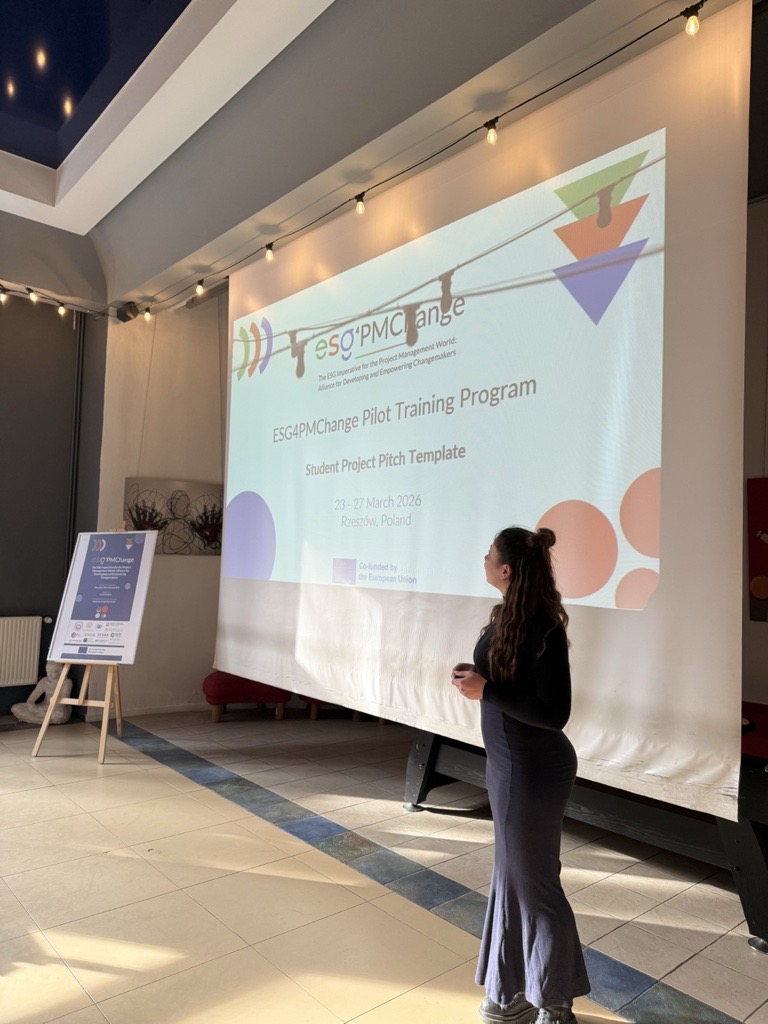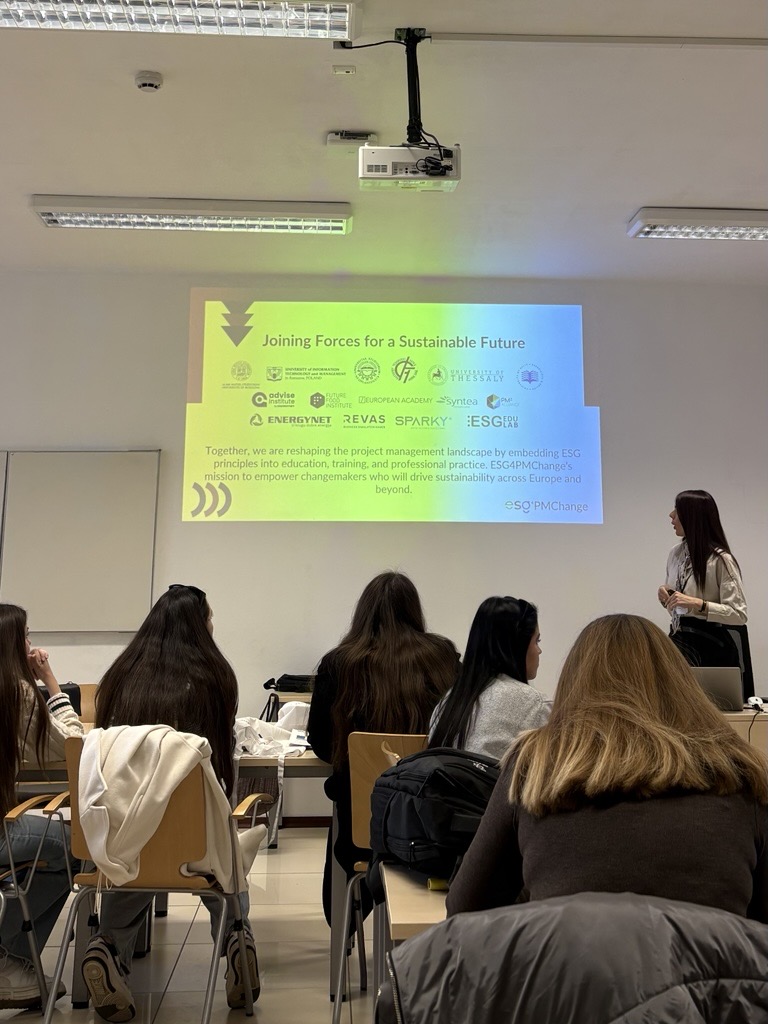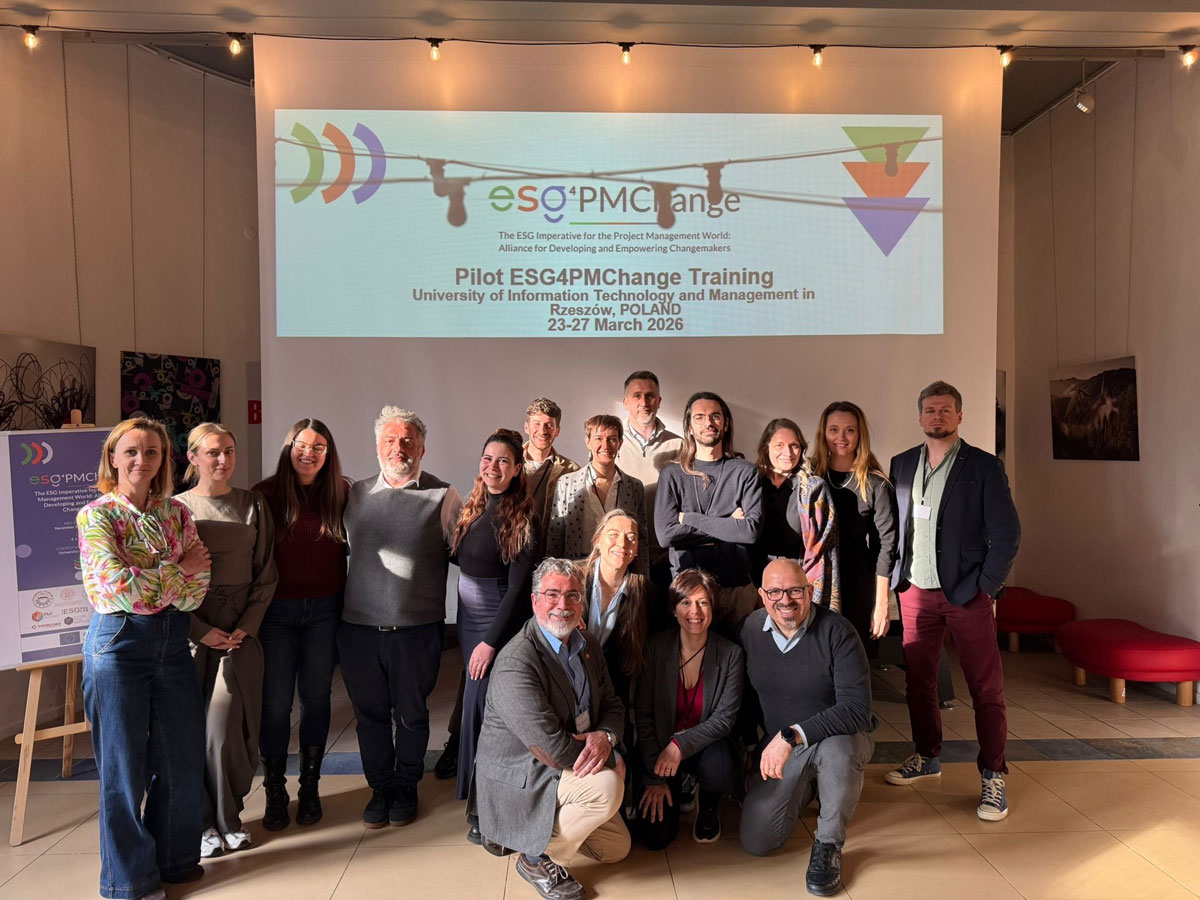
From 23 to 27 March 2026, the ESG4PMChange project team came together in Rzeszów, Poland, for a full week of learning, exchange, and collaboration. Hosted by the University of Information Technology and Management in Rzeszow (UITM), the pilot training brought students and project partners into the same room to explore what ESG really means when it is applied to project management in practice.
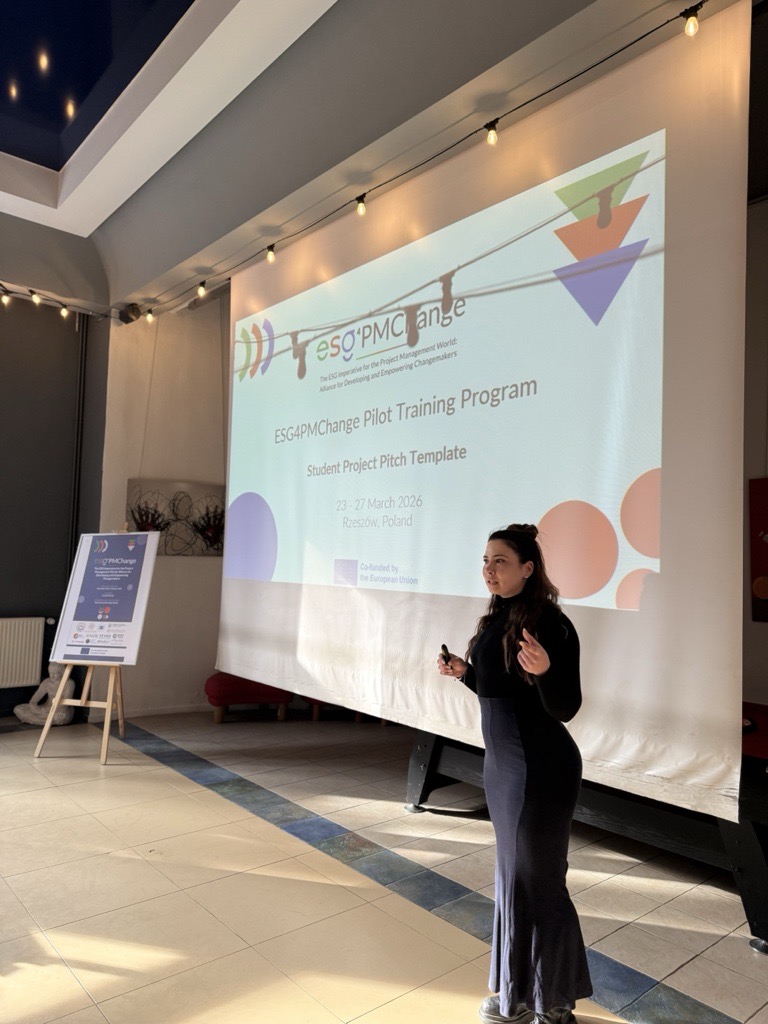
Across five intensive days, students worked through the full logic of an ESG-oriented project: defining purpose, identifying stakeholders, shaping governance, thinking through risks and trade-offs, setting KPIs, and presenting their project ideas in a final pitch. The programme moved gradually from early project framing to more complex decision-making, giving participants the chance to see how sustainability, accountability, and project design connect in a real learning setting.
What made the week especially valuable was the way learning happened. This was not a passive training format. Students were asked to test ideas, work in teams, make decisions, and reflect on the kind of skills ESG-focused project work actually requires. From the first discussions to the simulation exercises and final presentations, the atmosphere was practical, collaborative, and future-oriented.
For us, the pilot was a strong example of how project-based learning can help students connect sustainability, responsibility, and decision-making in a way that feels real and relevant. It also showed the importance of giving learners space to build confidence, work across disciplines, and translate broad ESG concepts into concrete project choices.
Another important part of the week was the opportunity to see how students responded when ESG was treated not as a separate topic, but as something that influences the whole project lifecycle. That shift made the learning process much more tangible and helped underline why ESG competences matter more and more for future professionals.
Across five intensive days, students worked through the full logic of an ESG-oriented project: defining purpose, identifying stakeholders, shaping governance, thinking through risks and trade-offs, setting KPIs, and presenting their project ideas in a final pitch. The programme moved gradually from early project framing to more complex decision-making, giving participants the chance to see how sustainability, accountability, and project design connect in a real learning setting.
What made the week especially valuable was the way learning happened. This was not a passive training format. Students were asked to test ideas, work in teams, make decisions, and reflect on the kind of skills ESG-focused project work actually requires. From the first discussions to the simulation exercises and final presentations, the atmosphere was practical, collaborative, and future-oriented.
For us, the pilot was a strong example of how project-based learning can help students connect sustainability, responsibility, and decision-making in a way that feels real and relevant. It also showed the importance of giving learners space to build confidence, work across disciplines, and translate broad ESG concepts into concrete project choices.
Another important part of the week was the opportunity to see how students responded when ESG was treated not as a separate topic, but as something that influences the whole project lifecycle. That shift made the learning process much more tangible and helped underline why ESG competences matter more and more for future professionals.
Across five intensive days, students worked through the full logic of an ESG-oriented project: defining purpose, identifying stakeholders, shaping governance, thinking through risks and trade-offs, setting KPIs, and presenting their project ideas in a final pitch. The programme moved gradually from early project framing to more complex decision-making, giving participants the chance to see how sustainability, accountability, and project design connect in a real learning setting.
What made the week especially valuable was the way learning happened. This was not a passive training format. Students were asked to test ideas, work in teams, make decisions, and reflect on the kind of skills ESG-focused project work actually requires. From the first discussions to the simulation exercises and final presentations, the atmosphere was practical, collaborative, and future-oriented.
For us, the pilot was a strong example of how project-based learning can help students connect sustainability, responsibility, and decision-making in a way that feels real and relevant. It also showed the importance of giving learners space to build confidence, work across disciplines, and translate broad ESG concepts into concrete project choices.
Another important part of the week was the opportunity to see how students responded when ESG was treated not as a separate topic, but as something that influences the whole project lifecycle. That shift made the learning process much more tangible and helped underline why ESG competences matter more and more for future professionals.